Tempting the Conqueror
Though it may seem unlikely, temptation is necessary to settle and confirm us in the spiritual life. It acts like winds that cause the mighty cedars of the mountains to strike more deeply into the soil.

Once a noted scientist observed that “early voyagers imagined that the coral-building animals instinctively built up the great circles of the Atoll Islands to afford themselves protection in the inner parts.” But this thought was disproved by showing that the insect builders can only live and thrive confronting the open ocean and in the highly aerated foam of its relentless surf. Likewise, many have held that protected ease is the most favorable condition of life. In contrast, all the noblest and strongest lives prove, on the contrary, that endurance of hardship makes men and is the factor that distinguishes between mere existence and vigorous vitality. Hardship makes character.

So it is with Christians. Temptation drives us deeper into our relationship with our Lord. He uses it to teach us that we can be victorious over those spiritual challenges.
“In all these things we are more than conquerors through him that loved us.” (Romans 8:37)
—- paraphrase of devotion from Streams in the Desert, January 13.
January 1st
Today, we stand on the verge of the unknown. 2025 lies before us, and we are going forward to possess it. Who can tell what we shall find? What new experiences, what changes, what new needs will arise? All our supply comes from the Lord God Almighty, whether or not we wish to acknowledge that. Remember this encouragement from years before, “The path ahead is a land of hills and valleys with plenty of rain. It is a land that the Lord your God cares for. He watches over it from the beginning to the end of the year!”
—- a paraphrase of Deuteronomy 11:11-12; Streams in the Desert
Prayer by Righteous People Gets Things Done
Herod Agrippa I, king over Judea, Samaria, Galilee, and territories east of the Jordan River, beheaded the apostle James and arrested Peter. He plans on executing Peter, as well, to reinforce the support of the Sanhedrin for his rule. But it is the weeklong Feast of Unleavened Bread, the time when the Jews celebrate their deliverance from slavery in Egypt. For whatever reason, Agrippa will wait until the holidays are over.
Although Peter has been arrested by the Sanhedrin twice, this is his first recorded altercation with the Romans. In fact, until this point, the Romans seemed to have ignored the church, thinking it was just another Jewish sect and posed no political threat to order. Between eight and fourteen years prior, the Roman governor Pilate crucified their leader, Jesus—not because He threatened any disruption to Rome’s rule, but because the Sanhedrin threatened unrest if Pilate let Jesus live.
Pilate was indifferent to the wishes of the Jews so long as they didn’t interfere with the performance of his job. Agrippa, however, is more invested in the people he rules and their religion. He kept Caligula from installing a statue of himself in the temple and read to the people from the Mosaic law. He plans on killing Peter not to ensure rest but to build goodwill.
But the church is praying. God promises to hear, with a mind, to act on the prayers of righteous people. Around this time, James, Jesus’ half-brother, wrote, “The prayer of a righteous person has great power as it is working.” Peter will later affirm the sentiment. Peter will be rescued unscathed. That doesn’t mean God grants all the requests of His followers, and crucifixion is still in Peter’s future. But, like the night of the storm, Jesus still has plans for Peter on earth.
This is a story about the power of earnest and fervent prayer by righteous everyday people. Bibleref.com
Book of Revelation – Chapter 3
Sardis was the fruitless church that began in 1520 A.D. and will extend into the Tribulation period. Christ first commended it as He did the previous churches. It had a name but was dead, shining solely by the light of a brilliant past. This church forgot the magnitude of its heavenly calling and its holy character. “It is far better to begin small and grow than begin with great plans, all of which dry up and come to nothing” (John Phillips commentary, page 62). Here we see God calls for a fivefold revival package:
- Be watchful or alert, knowing that now it is high time to awake out of spiritual sleep (Romans 13:11).
- Strengthen the things which remain, that are ready to die. Salvage the little good that remained in their bastion of dead orthodoxy.
- Remember or recall the former days of their salvation when filled with purity and zeal.
- Hold fast or retain the simple truth of the gospel and discard the excess baggage of pomp and ceremony.
- Repent or change their minds. It was a call for the entire church, not just a few individuals.
The problem at Sardis is a similar problem with the other churches in compromising with the world system, the flesh, and the devil. But there were and are a few that do not. They possess a genuine salvation experience that will remain eternally in the book of life.
Philadelphia church covers the years from 1750 A.D. until the Rapture. It was a feeble church but was a missionary-minded one, dedicated to spreading the gospel. Though a minority, for they had “a little strength,” they did keep His name. There was no rebuke of the Lord for this church. He assures the church that it will be saved from that hour by the Lord’s coming in the sky. What is coming will be a situation on earth worse than anything before when the Antichrist reigns and the Great Tribulation period begins. We see in verse 12 the promise to those who are faithful:
- They become pillars in the temple of GOD;
- They have the name of GOD written upon them, thus identifying them and allowing them access into the city of GOD – the New Jerusalem (Revelation 21 & 22);
- They have the (Christ’s) new name written upon them. This new name of Christ entitles them to be His servants, where they shall see His face (chapter 22, verses 3 and 4).
The final of the seven churches is Laodicea. This church covers the years from 1900 A.D. to the Tribulation hour.
Laodicea church, the “fashionable” church, is where materialism was a perennial problem. It drowns its spiritual influence whenever any church has ridden the crest of material affluence. When Christ called out to “the angel of the church of the Laodiceans,” it was to say that the church at Laodicea was none of His. The Lord never dilutes nor distorts the truth. There is no hiding behind little disguises and safe conventions. Laodicea is a deluded church marked by complete compromise with the world. It is the present-day church’s archetype or very typical example. Only God alone knows how serious the present situation is. This era is a highly prosperous one. Her people have erected elaborate church structures worth millions of dollars. Although buildings are necessary for worship and service, we need to see that they should be humble structures rather than the latest multi-million dollar architectural monstrosities that glorify men. God describes the Laodicean church as:
- Wretched and miserable and poor, because riches usually make one sad (very unhappy) and pathetic (distressful).
- Blind because they cannot see the need of the millions who are dying without the Savior and going into eternal loss.
- Naked, both now and in eternity, don’t have Christ’s robe of righteousness (2 Corinthians 5:21).
Then, Christ gave instructions:
- Buy gold tried in the fire from Christ, that you may be rich ( 1 Peter 1:7); where the trial of our faith is more than of gold;
- Buy white clothing – a reference to the garments of salvation and the robe of righteousness in (Isaiah 61:10);
- Anoint your eyes with eyesalve, that you may see – This speaks of illumination which only the saved share. (1 Corinthians 2:14).

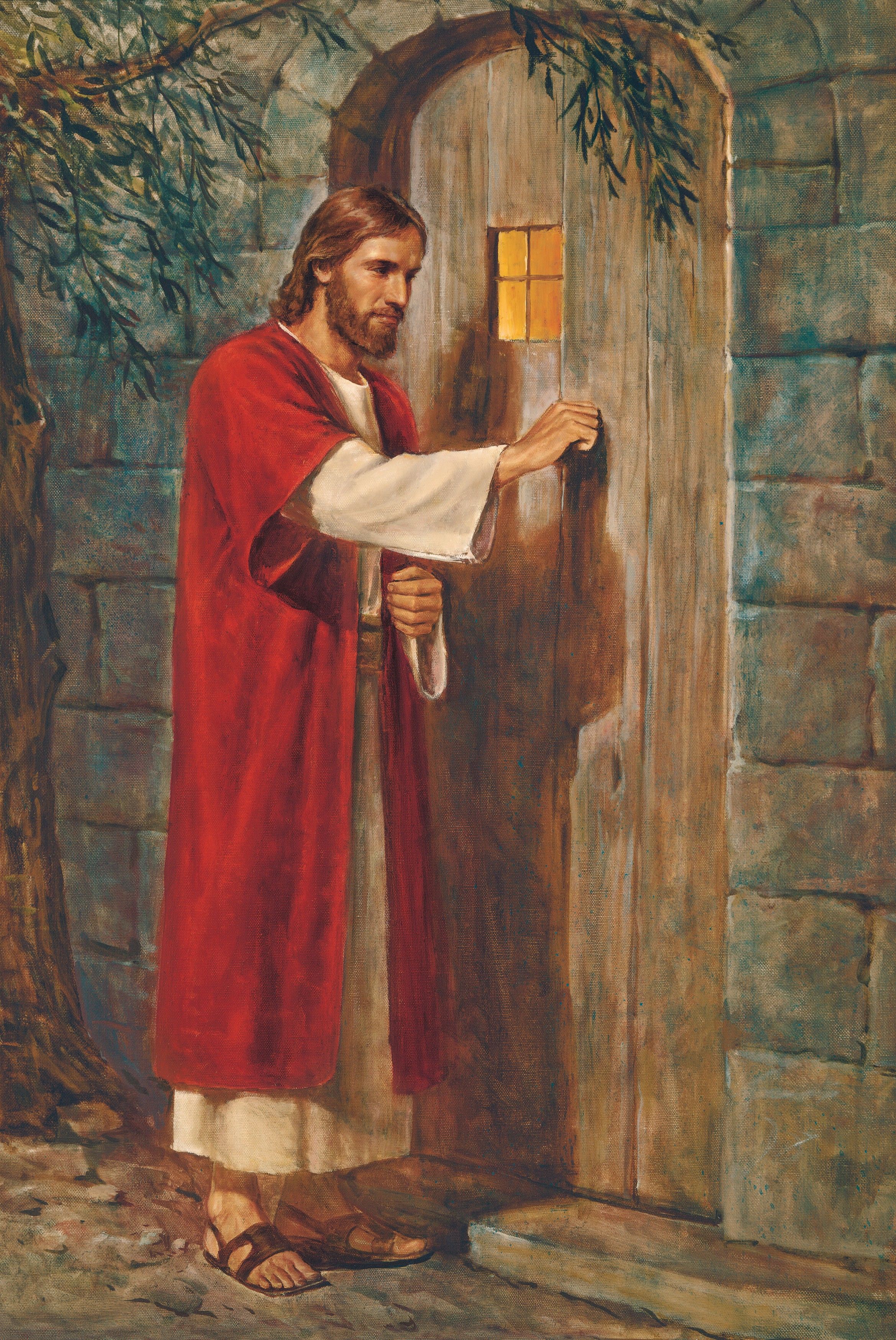
In verse 20: Christ calls out, “Behold, I stand at the door….”
Here we have the picture of Christ standing outside the latter-day church rather than the heart of an individual. Overcomers are granted to sit with Christ and His Father in heaven. We have now concluded the last warning to the churches for one last time.
Next, we join John in the future, starting with chapter 4.
Book of Revelation – Chapter 4
The future lies ahead for John and us who believe in the Lord Jesus Christ. What comes next is an incredible view of heaven and the events that soon occur on earth’s inhabitants.
Chapters 2 and 3 covered the letters to the seven churches that span the present age of grace in which we now reside. You will notice that the Church is not mentioned again in Revelation until the end of the book. That is because the Church is in heaven and not on earth.
After completing the history of the seven churches, John sees a door open in heaven. The door only opens twice in the book of Revelation. Verse 1 allows the saints into heaven as Jesus leads us home, also known as the Rapture. A second time, toward the end of Revelation, the Lord Jesus Christ leads the armies of heaven to earth to set up His millennium kingdom.
One may ask, “What is the Rapture?” It is the literal, visible, bodily coming of Jesus Christ to call out of this world, literally and bodily, every born-again believer; first the dead, then the living. Remember that no man can know the date or the time of this event. Do take notice that the dead in Christ shall rise first as told to us in 1 Thessalonians 4:16-17. Then all of us who are alive will be caught up into the sky to meet the Lord Jesus Christ in the twinkling of an eye.
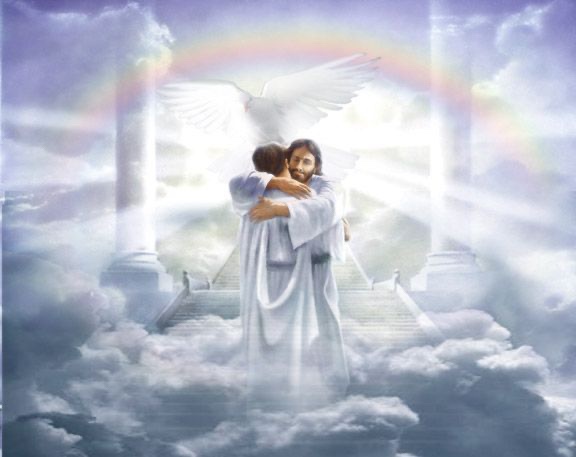
There is a difference between the Rapture and the Revelation of Christ. This truth needs to be fully understood because it is the basis for understanding the Book of Revelation, prophetic truth, and the placement of signs. There are two aspects, or stages, in the process of Christ’s second coming. The first phase is the Rapture of the Church (described in chapter 4), which removes the believer from the Judgments of chapters 6 to 18. The second phase is called the Revelation (described in chapter 19), which restores the believer to earth as he returns with Christ to planet earth. The intervening chapters 6 through 18 will cover seven years called the Tribulation (or the time of Jacob’s trouble).
Earth’s inhabitants experience seven years of incomparable judgments immediately following the Rapture. These judgments end with the Battle of Armageddon when heaven’s door swings open a second time (chapter 19, verses 11-16) so that the believer may exit heaven with Christ for the return trip to earth. Wars stop, peace reigns, and the millennium kingdom of the Lord Jesus Christ operate from Jerusalem.
What is meant by “the time of Jacob’s trouble?” The Church will not be on earth during the Tribulation hour. The Tribulation is Israel’s time of suffering. See Jeremiah 30:7 and Daniel 12:1. In Daniel 9:24, we read, “seventy weeks are determined upon thy people (Israelites) and upon thy holy city (Jerusalem).” The seven years of Tribulation is the final of the 70th week of Daniel 9. The Church, the bride of Christ, elected to be His sweetheart and wife for all eternity, is not in view during the Tribulation.
The future begins in Chapter 4 and Chapter 5. The starting point focuses on events in heaven, followed by what occurs on earth during the Tribulation in Chapters 6 through 18.
John focuses on the throne as he looks around now that he is in heaven. The throne is a throne of God’s governance. John uses jasper and sardine stone to describe what he saw. “Jasper emphasizes the hardness connected with the government of God. His laws are fixed and firm, unyielding and unrelenting” (John Phillips commentary, page 82). When Christ rules the earth, it will be with a rod of iron, symbolically hardness and unyieldedness. “The sardine stone suggests the holiness connected with the government of God, for Sardis is a deep, fiery, flashing red. It reminds us that ‘our God is a consuming fire’ (John Phillips commentary, page 82).
A rainbow encircles the throne that John describes like an emerald. The color has to do with the earth. The circle symbolizes perfection. God’s judgment will be flawless and also formal. Notice the 24 seats or thrones around God’s throne. We are witnessing a court in session. All things will be done orderly and decently. Coming is a fearful judgment with all the lightning and thundering and voices coming out of the throne. A sea of glass like a crystal was before the throne. God’s final judgment will be transparent and fixed. Peace and calmness surround the throne of God. The Church is at rest in heaven before the storm hits the earth.
In describing the four beasts, John uses the words “like a” and “as a,” meaning that the descriptions are all symbolic and not literal. Most of Revelation is literal, but the symbolic will use these similar words for symbolic meaning. Chapter 4 ends in a glorious moment in heaven. The crowned saints lay their rewards at the feet of Jesus. They lay aside their rewarded glory to add to His glory.
Next is Chapter 5 – the book with the seven seals.
Bill Wyler
 More from Bill
- An error has occurred; the feed is probably down. Try again later.

-
Archives
- April 2025 (1)
- February 2025 (1)
- January 2025 (6)
- December 2024 (1)
- April 2024 (4)
- March 2024 (4)
- February 2024 (6)
- January 2024 (8)
- November 2023 (1)
- July 2023 (1)
- June 2023 (1)
- May 2023 (1)
-
Categories
-
RSS
Entries RSS
Comments RSS
 Reviews and Views